The Free National Parks Access Pass: Who Qualifies and How to Get One
A free, lifetime pass to 2,000+ federal recreation sites for U.S. citizens and residents with a permanent disability. Who qualifies and how to apply.
By Accessible America · Published · 5 min read
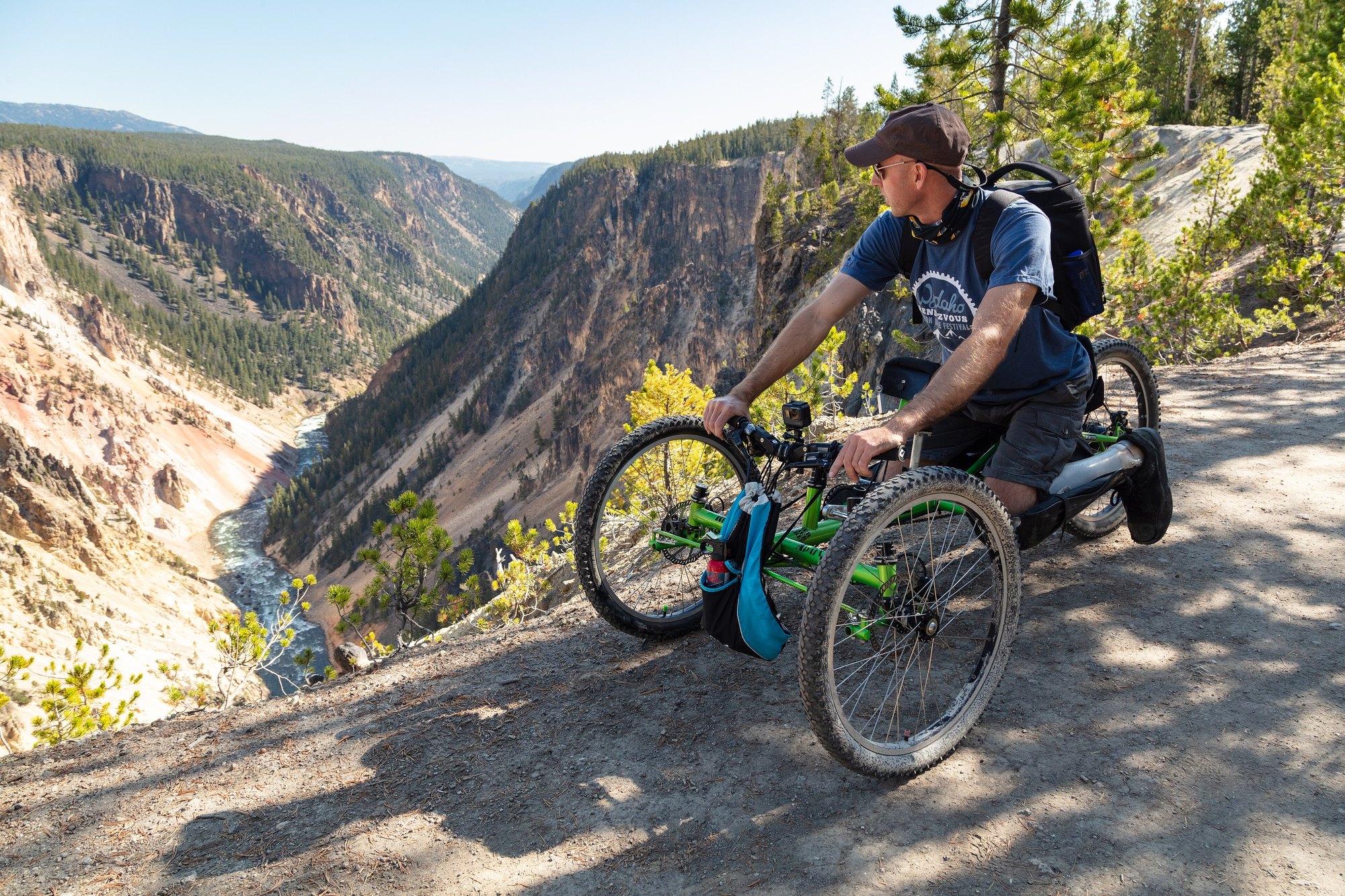
If you have a permanent disability, you may never need to pay an entrance fee at a national park again. The Access Pass is part of the America the Beautiful program run by federal land agencies. For U.S. citizens and residents of any age who qualify, it is free and lasts a lifetime.
The pass works at more than 2,000 federal recreation sites run by six agencies, including national parks. It covers you and the passengers in your private vehicle, and at many sites it also brings a discount on fees such as camping. It is not valid at state or local parks. You can get one in person at a federal recreation site, or by mail from the USGS Store for $12.50 in fees. Here is who qualifies, what proof you need, how to apply and what the pass does and does not cover.
Who qualifies
The Access Pass is for U.S. citizens and permanent residents who have been medically determined to have a permanent disability that severely limits one or more major life activities. The USGS gives examples of those activities: caring for yourself, performing manual tasks, walking, seeing, hearing, speaking, breathing, learning and working. The disability can be physical, mental or sensory.
Two points that surprise people:
- It is not based on a disability percentage. The disability does not have to be rated 100%. What matters is that it is permanent and limits a major life activity.
- There is no age limit. A child with a permanent disability can get their own pass.
What counts as proof
You will need identification showing you are a U.S. citizen or permanent resident, such as a driver's license, passport, green card or birth certificate. The ID must be in the name of the person the pass is for, so a child's pass needs the child's ID, not a parent's.
You will also need documentation of the permanent disability. Examples the USGS accepts:
- A statement from a licensed physician saying that the person has a permanent disability, that it severely limits one or more aspects of daily life, and the nature of those limitations.
- A document from a federal agency, such as a Veterans Affairs award letter or summary of benefits, or a Social Security Disability Income (SSDI) or Supplemental Security Income (SSI) notice of award. A VA award letter must state the disability percentage.
- A document from a state agency, such as a vocational rehabilitation agency.
Not accepted: a disabled parking placard or placard application, and an SSDI notice of benefit increase.
How to get the pass
| In person | By mail (USGS Store) | |
|---|---|---|
| Where | More than 1,000 federal recreation sites that issue passes | store.usgs.gov/access-pass |
| What to bring or upload | Your ID and disability documentation | Your ID and disability documentation |
| Cost | The pass is free | Free pass, plus a $5 processing fee and a $7.50 handling fee |
| How long it takes | On the spot, once your documents are checked | Usually processed and shipped within 5 business days of arrival, plus shipping time |
For the mail option, the USGS lists typical shipping times of 5 to 10 business days by USPS, or faster with FedEx options. The National Park Service recommends ordering at least three weeks before your trip. The mailed pass is a physical card: receipts, photos or copies of it are not accepted at the gate.
Who and what it covers
At sites that charge per vehicle, the pass admits you and the passengers in your non-commercial vehicle. At sites that charge per person, it admits you plus up to three other adults, four adults in total. Children under 16 are always admitted free.
A few rules worth knowing before you go:
- The pass owner has to be there. Only the vehicle carrying the pass owner is covered. If your group travels in two cars, the second car pays the fee or needs its own pass.
- Motorcycles: the pass admits two motorcycles.
- Bring photo ID. Staff can ask for it to confirm the pass is yours.
- Only federal sites. The pass is honored where the National Park Service, USDA Forest Service, U.S. Fish and Wildlife Service, Bureau of Land Management, U.S. Army Corps of Engineers and Bureau of Reclamation charge entrance or day-use fees. The Tennessee Valley Authority may also honor it for entrance or camping discounts. It is not valid at state parks or city and county parks.
Discounts on camping and other fees
At many sites the pass also gives a discount on "expanded amenity fees" such as camping, swimming, boat launches and guided tours. Because six agencies run the program under different rules, the discount is not the same everywhere, so check with the site. General rules from the USGS:
- The discount applies only to the campsite the pass owner occupies, not to extra sites used by others in the group.
- If utility hookups are billed separately, there is no discount on them.
- Group campsites and group facilities with a flat fee get no discount.
Using your pass
- At a staffed entrance, show the pass and your photo ID.
- At sites without an entrance station, display the pass on your dashboard with the signature side showing, or in a free hangtag on your rearview mirror. Sites that issue passes also give out hangtags.
- Open vehicles such as Jeeps and motorcycles can get a free decal as proof of payment at unstaffed sites. Decals are issued in person each year, and you must show your pass, driver's license and vehicle registration, all in the same name. Decals are not accepted at staffed entrances.
If you already have a pass, or lose one
- Lost or stolen: you will need to apply for a new pass.
- Damaged: it can be replaced as long as part of the pass is still identifiable and you show ID.
- Old Golden Access Passport: it is still valid for life. You can also exchange it free for the current pass in person at a site that issues passes.
Plan your trip
Once you have your pass, see our list of accessible national parks, or browse accessible places by state. Each destination page covers parking, entrances, restrooms, trails and sensory considerations, so you know what to expect before you arrive.
Sources
- America the Beautiful passes (National Park Service)
- Access Pass: eligibility, documentation, use and benefits (USGS Store)
Researched from official sources and reviewed before publishing. Rules and fees can change; check with the agency or venue before you travel.