If an Airline Damages, Loses or Delays Your Wheelchair: Your Rights and What to Do
What U.S. rules require when an airline damages, loses or delays your wheelchair or scooter, and the steps to take at the airport and after your flight.
By Accessible America · Published · 6 min read

When you check a wheelchair or scooter for a flight, it can come back bent, broken or not at all. Federal rules under the Air Carrier Access Act spell out what the airline has to do when that happens, and a 2024 Department of Transportation (DOT) rule made them stronger. Most of the new protections are now enforced.
The airline has to give you your rights in writing, repair or replace a damaged chair (using a repair shop you choose, if you prefer), and pay for a loaner that meets your needs while you wait. A delayed chair has to reach you within 24 hours of landing on most flights. Your first step is to tell the airline before you leave the airport. The sections below explain each of these rights, what DOT has put on hold, and how to protect your claim.
Who these rules cover
The rules are in Part 382 of Title 14 of the Code of Federal Regulations. They apply to U.S. airlines on all of their flights, and to foreign airlines on flights that begin or end at a U.S. airport. The CRO requirements apply to airlines flying aircraft with 19 or more passenger seats.
Before you fly: steps that protect you
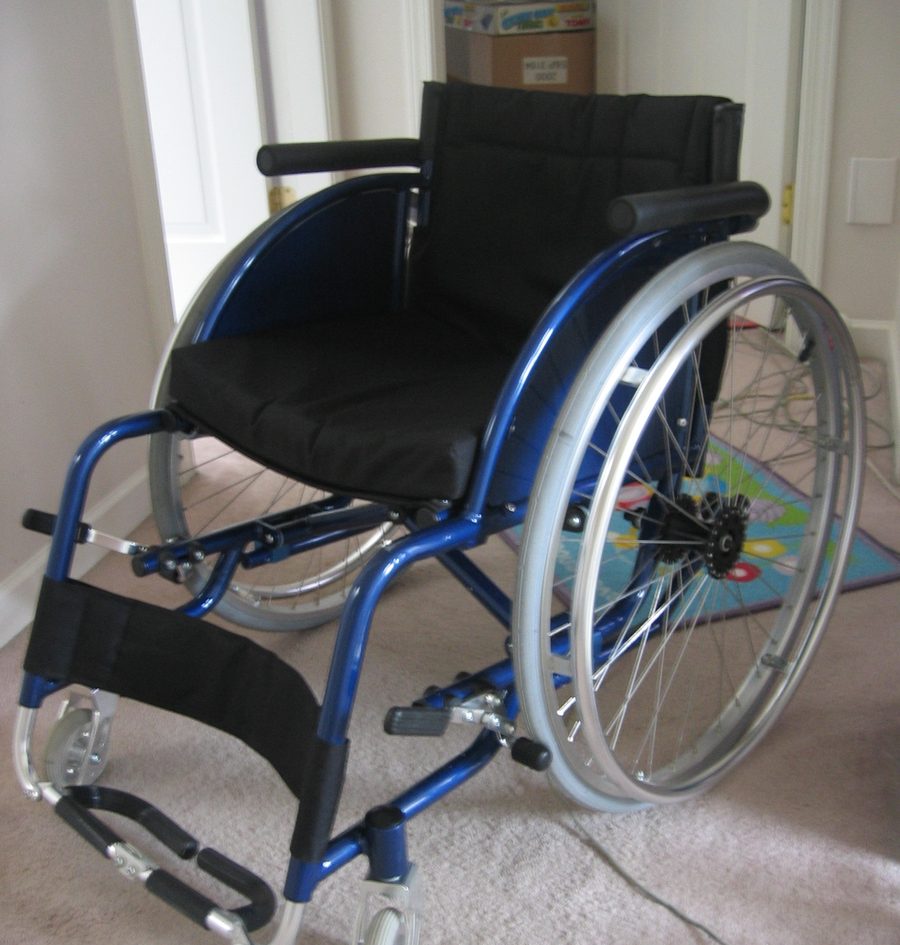
- Photograph your chair from every side, including the controls, wheels and seating, on the day you travel. If the airline disputes when the damage happened, dated photos help.
- Bring written instructions for folding, disassembly and reassembly, and attach a copy to the chair. The airline must let you provide written directions and follow them as far as safety rules allow.
- Keep your purchase receipt or another record of what the chair cost. It is the basis for compensation on domestic flights.
- Ask for your chair at the aircraft door. Airlines must return checked wheelchairs as close as possible to the aircraft door unless you ask for baggage claim instead, and must unload them among the first items.
Before the cabin door closes, the airline must tell you whether your wheelchair or scooter was loaded. If it was not, the airline must offer to take you off the plane and rebook you at no extra cost on its next available flight, or a partner's. It must also tell you, before you get off the plane, when your chair has been unloaded at your destination.
If your chair is damaged or lost
Report it to airline staff right away, and ask for the CRO if the problem is not fixed on the spot. Every airline covered by the rule must have a CRO available at each U.S. airport it serves, in person or by phone at no cost to you. The CRO can overrule other airline staff (but not a pilot's safety decision) and must give you a written statement of the facts and what the airline will do.
Once the airline knows your chair was mishandled, it must immediately give you written notice, in an accessible format, of your rights to:
- file a claim with the airline,
- get a loaner wheelchair or scooter,
- choose your own vendor for the repair or replacement, and
- reach a CRO, with information on how to contact one.
The airline must give you a reasonable amount of time to inspect the chair and file a claim. Then you choose one of two options:
| Airline handles it | You choose the vendor | |
|---|---|---|
| Who arranges the repair or replacement | The airline | A vendor you pick |
| Who pays | The airline pays for the repair or a replacement of equal or better function and safety | The airline pays the vendor directly, and pays to transport the chair there unless you arrange transport yourself |
| If the repair is not good enough | Send the airline a claim within a reasonable time of getting the chair back. If the claim is valid, it must repair or replace the chair again, to your satisfaction | Same |
The loaner chair
While you wait, the airline must use its best efforts to provide an adequate loaner that meets your functional, mobility and safety needs, and pay for it. If the loaner it offers does not meet your needs as well as your own chair, you can find a better one yourself. The airline must then pay you back within 30 days of your request. Keep receipts, since the airline can ask for them.
How much the airline pays
On domestic flights, the usual cap on baggage compensation does not apply to wheelchairs and other assistive devices. Compensation for a lost, damaged or destroyed device is based on its original purchase price. If the mishandling happens on an international flight, the liability limits of the Montreal Convention apply.
If your chair is delayed
A chair that does not arrive with you must reach your final destination within 24 hours of your arrival on domestic flights and international flights of 12 hours or less, or within 30 hours on international flights longer than 12 hours. You choose whether to pick it up at the airport or have it delivered somewhere reasonable, such as your home or hotel.
The airline must also:
- give you status updates whenever something changes, if you filed a claim,
- provide safe, adequate seating at the airport while you wait for your chair or a loaner, and
- pay you back for transportation to or from the airport that you needed because your chair was delayed. Keep the receipts.
What is not enforced yet
DOT is reconsidering four parts of the 2024 rule and has said it will not enforce them until April 30, 2027 while it writes a new rule. They are still printed in the regulations, but DOT has said it will not take enforcement action on them until then:
- The presumption of fault. The 2024 rule says that when a chair comes back in worse condition, the airline is presumed to have mishandled it unless it proves otherwise. This is on hold. The airline's other obligations to repair, replace, provide a loaner and pay for a damaged chair are in effect.
- Written notice at check-in of your right to contact a CRO and file a claim.
- Paying the fare difference when your chair does not fit on the flight you wanted and you have to buy a more expensive flight.
- Yearly refresher training for airline staff who handle wheelchairs.
These could change, so check DOT's notices before you rely on them.
If the airline does not make it right
- Write to the airline. Airlines must respond to written disability complaints, but they do not have to answer one sent more than 45 days after the incident unless DOT refers it. Say whether you contacted a CRO, give the CRO's name and the date if you have them, and include any written response. The airline must answer within 30 days and must say whether it admits or denies a violation.
- Complain to DOT. You can file a complaint online or by mail with DOT's Office of Aviation Consumer Protection, 1200 New Jersey Avenue, SE, Washington, DC 20590. File within 6 months of the incident. For disability complaints, DOT forwards your complaint to the airline, reviews the airline's response and mails you its findings, which can take some time.
Keep these handy
Our printable air travel rights checklist and accommodation request letters are free to print or save before you fly. For more official help lines and agencies, see our accessible travel resources.
Sources
- 14 CFR Part 382: Nondiscrimination on the Basis of Disability in Air Travel (eCFR)
- Ensuring Safe Accommodations for Air Travelers With Disabilities Using Wheelchairs, final rule (Federal Register, December 17, 2024)
- Notification of enforcement discretion extending four provisions to April 30, 2027 (Federal Register, August 4, 2026)
- File a Consumer Complaint (U.S. Department of Transportation)
Researched from official sources and reviewed before publishing. Rules and fees can change; check with the agency or venue before you travel.